
Where to See Whale Sharks: Best Liveaboard Destinations, Seasons and Diving Guide
Whale sharks are the largest fish in the ocean, yet they are among the most peaceful animals divers can encounter. Sightings can never be guaranteed, but some liveaboard destinations give you a much better chance than others.
This guide explains where whale sharks are most frequently seen, the best months to travel, the itineraries that visit known hotspots, typical encounter depths and the certification level recommended for each destination.
Quick answer
The best liveaboard destinations for whale sharks are the Maldives, Ningaloo Reef in Western Australia, Djibouti, the Sea of Cortez in Mexico and selected areas of the Philippines. Whale sharks follow seasonal food sources rather than fixed routes. Choosing the right destination at the right time of year matters more than choosing the most expensive boat.
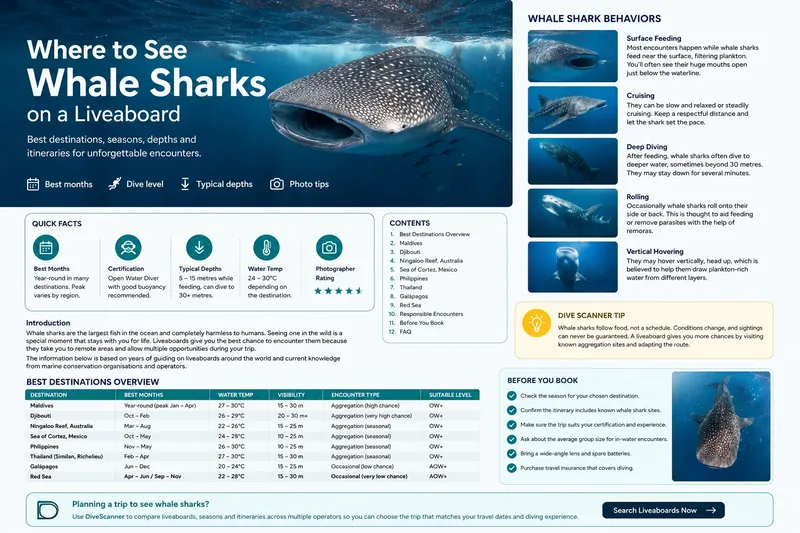
Quick facts
| Species | Whale shark, Rhincodon typus |
|---|---|
| Typical encounter depth | Surface to around 15 metres for most diver and snorkeller encounters. |
| Certification | Open Water is suitable in many destinations. Advanced Open Water is recommended where current, depth or blue-water diving are part of the itinerary. |
| Best trip style | Liveaboards that visit known feeding or aggregation areas over several days. |
| Best for | Pelagic lovers, photographers, snorkellers and first-time liveaboard guests. |
| Conservation status | Endangered on the IUCN Red List. |
Why divers travel for whale sharks
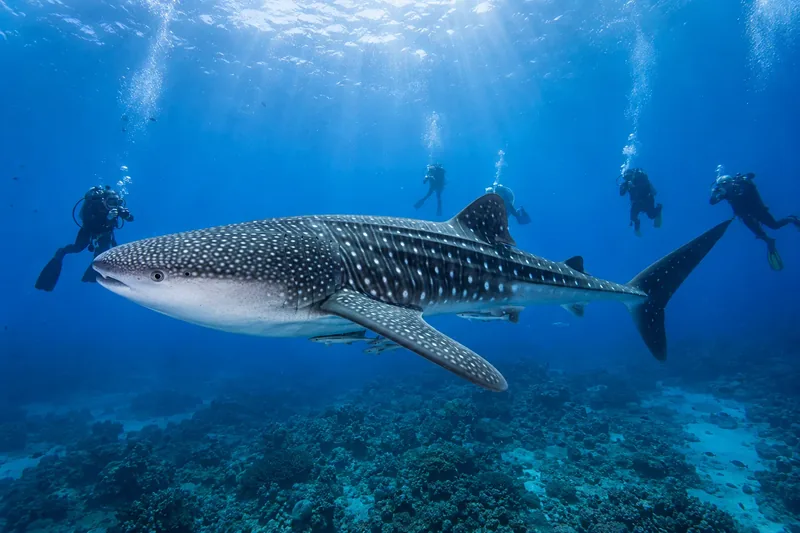
Meeting the world's largest fish underwater is different from a normal shark dive. Whale sharks are filter feeders. They feed on plankton, fish eggs and tiny organisms rather than large prey. Divers usually see them cruising slowly or feeding close to the surface.
Every encounter is different. Some animals remain near the surface for several minutes. Others pass once and disappear into blue water. Their behaviour depends on food, current, tide and local ocean conditions.
Liveaboards help because they give you more time in the right area. A day boat may visit one site once. A liveaboard can spend several days moving between sites that are known for seasonal whale shark activity.
Do not choose a liveaboard only because it mentions whale sharks. Check whether the itinerary visits recognised seasonal hotspots during your travel dates. The same destination can be excellent one month and quiet the next.
Best whale shark liveaboard destinations at a glance
| Destination | Best months | Typical depth | Best route type | Realistic expectation |
|---|---|---|---|---|
| Maldives | Year-round in South Ari, with stronger patterns by region | Surface - 15 m | South Ari or Central Atolls | One of the best liveaboard choices for whale shark-focused divers. |
| Ningaloo Reef | March - August | Surface - 10 m | Ningaloo and Western Australia reef trips | Excellent season, mostly snorkel-based encounters. |
| Djibouti | October - February | Surface - 15 m | Gulf of Tadjoura seasonal trips | Strong seasonal area with young whale sharks feeding near the surface. |
| Sea of Cortez | Late summer to autumn for liveaboards, La Paz often stronger in cooler months | Surface - 15 m | Sea of Cortez routes and La Paz add-ons | Very good, but check whether the itinerary includes whale shark areas. |
| Philippines | March - June for Tubbataha | Surface - 20 m | Tubbataha liveaboards | Possible, but not the only reason to book. |
| Thailand | February - April | Surface - 15 m | Similan, Surin and Richelieu Rock | Occasional to good in the right season, never guaranteed. |
| Galapagos | June - November | Variable | Darwin and Wolf | Possible, but conditions suit experienced divers. |
Maldives: South Ari and Central Atolls
The Maldives is one of the most practical liveaboard choices for divers hoping to see whale sharks. South Ari Atoll is especially important because whale sharks are seen there throughout the year, although sightings still change with weather, plankton and local conditions.
Most encounters happen close to the surface or in shallow water. Many liveaboards include snorkelling opportunities when a whale shark is spotted because the animal may be feeding above normal scuba depth.
Best routes include South Ari, Central Atolls and Best of Maldives itineraries that specifically include South Ari. These routes are usually suitable for Open Water divers with good buoyancy, although current and channel dives may require more experience on some itineraries.
Divers who want a balanced trip with whale sharks, manta rays, reef sharks, turtles and warm-water reef diving.
Ningaloo Reef, Western Australia
Ningaloo is one of the most reliable whale shark regions in the world during the main season. The season usually runs from March to August, with some shoulder-season encounters depending on local conditions.
Most whale shark encounters at Ningaloo are snorkel-based. That does not make them less valuable. It simply means divers should understand that the best interaction may happen at the surface rather than during a scuba dive.
For liveaboard planning, Ningaloo and Western Australia itineraries are strongest for travellers who want reef diving, pelagic life and structured whale shark swim opportunities. Check the itinerary carefully because not every Australia liveaboard visits Ningaloo.
Djibouti: Gulf of Tadjoura
Djibouti is a strong seasonal whale shark destination, especially from October to February. Encounters often involve juvenile whale sharks feeding near the surface in plankton-rich water.
The diving style is different from many coral reef liveaboard destinations. Visibility can vary, and the main reason to travel is the seasonal whale shark activity rather than colourful reef scenery alone.
This destination is best for divers and snorkellers who are comfortable with remote travel and simple logistics. It is not the most polished luxury liveaboard region, but it can be excellent during the right season.
Sea of Cortez, Mexico
The Sea of Cortez can be excellent for large marine life. Whale shark encounters are strongly linked to areas around La Paz and seasonal feeding grounds. Some liveaboards focus on remote islands, sea lions, mobula rays and pelagic life, while whale shark swims may require a specific itinerary or add-on.
Before booking, check the route carefully. A Sea of Cortez liveaboard does not automatically mean whale sharks are included. The best trips are the ones that clearly mention La Paz, whale shark swim permits or dates aligned with known feeding seasons.
Philippines: Tubbataha and seasonal pelagic routes
Tubbataha is the strongest Philippines liveaboard route for pelagic diving, and the season is short. Liveaboards normally operate from March to June when sea conditions allow access from Palawan.
Whale sharks can be seen in Tubbataha, but they should be treated as a bonus rather than the only reason to book. The route is better known for reef sharks, walls, schooling fish, turtles and remote reef diving.
Thailand: Richelieu Rock, Similan and Surin Islands
Thailand can produce whale shark sightings during the Andaman Sea season, especially around Richelieu Rock. The strongest months are usually February to April, although sightings change a lot from year to year.
Similan and Surin liveaboards are accessible compared with more remote destinations. That makes Thailand a good choice for divers who want a chance of whale sharks without committing to a demanding expedition.
Galapagos: Darwin and Wolf
The Galapagos is a serious liveaboard destination. Whale sharks are most associated with Darwin and Wolf, especially during the cooler season from June to November.
This is not a beginner whale shark destination. The dives can involve current, depth, surge, negative entries and blue-water conditions. Advanced Open Water, strong buoyancy and previous current experience are strongly recommended.
Red Sea: possible, but not a primary whale shark trip
Whale sharks are occasionally reported in the Red Sea, but this is not the destination to choose if whale sharks are your main goal. The Red Sea is stronger for reef diving, wrecks, oceanic whitetips, dolphins, coral gardens and advanced offshore routes.
If a whale shark appears on a Red Sea liveaboard, it is a bonus. Divers should not book Brothers, Daedalus, Elphinstone, St Johns or northern wreck routes expecting a planned whale shark encounter.
Whale shark behaviour divers should understand
Whale sharks often feed near the surface with slow, steady movements. They may swim in a straight line, circle a food patch or change direction without warning. They are large, but they are still vulnerable to stress from boats, crowds and careless swimmers.
Good behaviour in the water is simple. Stay to the side. Do not block the animal's path. Do not chase. Do not touch. Keep your fins under control. Let the whale shark choose the distance.
For photography, use a wide-angle lens or action camera. Avoid crowding the head or tail. A side view usually produces a better image and keeps the animal's route clear.
If the guide tells you to enter without scuba gear, listen. Many whale shark encounters happen at the surface, and snorkelling may be safer and more respectful than trying to descend on top of the animal.
Which liveaboard should you choose?
Choose the liveaboard that matches your real diving level. A beginner-friendly Maldives itinerary is very different from a Galapagos expedition. Both may offer whale shark encounters, but the diving demands are not the same.
For the best chance, look for three things: the right month, the right route and enough days on the water. A short trip can work in some destinations, but a longer liveaboard usually gives the crew more flexibility if conditions change.
Planning a whale shark trip? Use DiveScanner to compare destinations, seasons and liveaboard routes before you book.
Compare liveaboardsFAQ
Can you guarantee whale sharks on a liveaboard?
No. Whale sharks are wild animals. Good operators can improve your chances by choosing the right season and sites, but nobody can guarantee a sighting.
What depth are whale sharks usually seen at?
Most encounters happen from the surface to around 15 metres. Whale sharks can dive much deeper, but divers and snorkellers usually see them while they are feeding or cruising in shallow water.
Is Open Water enough for whale shark diving?
Open Water is enough for many whale shark encounters in the Maldives, Ningaloo, Djibouti, Mexico and Thailand. Galapagos and some Philippines routes require stronger experience because of current, depth and open-water conditions.
Are whale sharks dangerous?
Whale sharks are filter feeders and do not hunt divers. The main risk is poor swimmer behaviour around a very large animal. Stay calm, keep distance and follow the guide's instructions.
Which destination is best for a first whale shark trip?
The Maldives is often the easiest liveaboard choice because it combines whale shark areas with warm water, varied routes and many boat options. Ningaloo is excellent for whale shark swims, but many encounters are snorkel-based rather than scuba-based.
Related liveaboard diving guides
- Best time to book a liveaboard by destination and season
- What is a liveaboard and how to choose the right boat
- Advanced liveaboard routes: certification, depth and insurance checks
Sources and responsible planning notes
This guide uses general whale shark conservation knowledge, official tourism season guidance, liveaboard route information and established destination patterns. Sightings change every year. Always check the current itinerary, season and operator notes before booking.