Liveaboard safety and navigation
Do Liveaboards Have a Dive Guide? How to Dive Safely Without One
Many liveaboards do not put a guide in the water for every dive. After the briefing, certified buddy teams may be expected to plan their own route, monitor their own gas and find their way back. On an easy itinerary this can feel wonderfully independent. For a fresh Open Water diver, it can also be the moment when a beautiful trip suddenly feels much bigger than expected.
What is the quick answer?
Do not book a self-guided liveaboard because the route is described as easy. Book it when you can navigate with a compass and natural references, or when you have a more experienced buddy who will genuinely dive with you. In the Bahamas, excellent visibility can make navigation easier, but clear water is not a substitute for a plan.
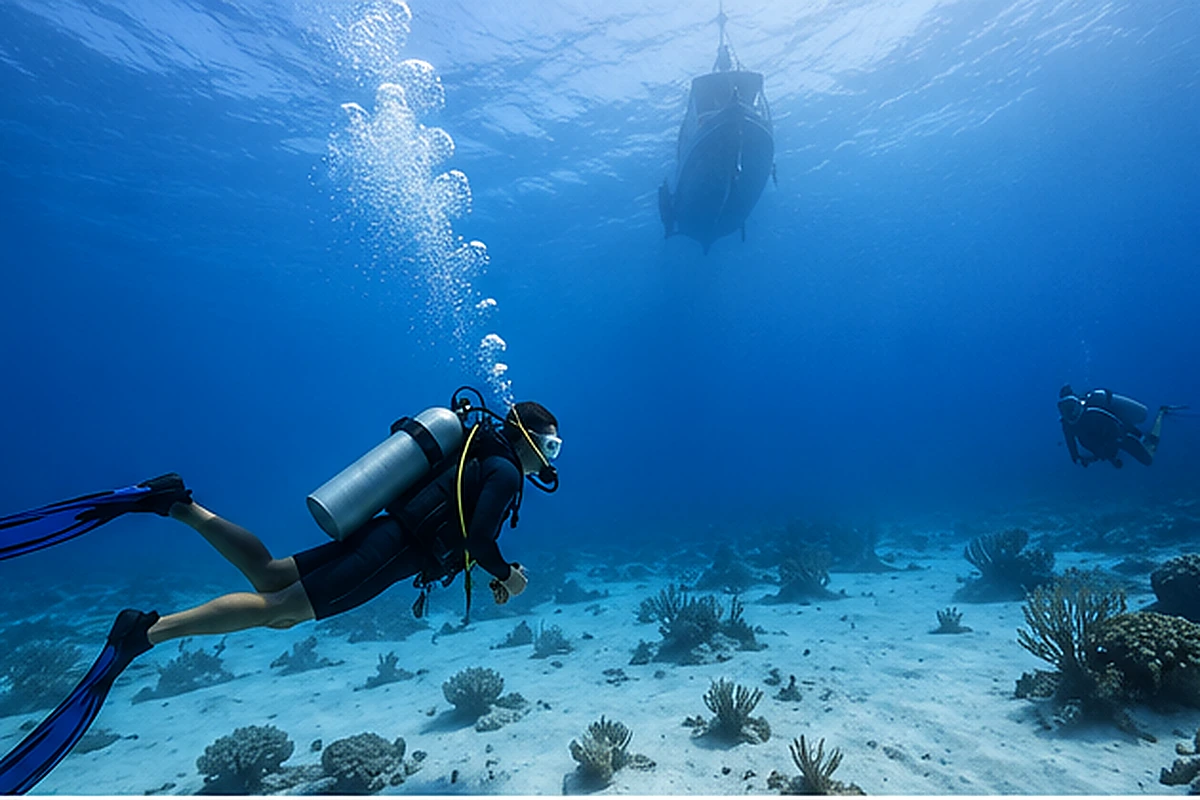
A quiet reef and clear water can make a dive look simple. The real question is whether you and your buddy can manage the route without following someone else.
Do liveaboards always provide an in-water guide?
No. On many liveaboard itineraries, the crew gives a detailed briefing and certified buddy teams dive independently. This is common even on routes that are not technically difficult.
The surprise is not usually the depth or the reef. It is the responsibility. You need to remember the route, watch your gas, stay with your buddy, recognise the turning point and return without waiting for a guide to signal every decision.
Ask the exact question before booking
Do not ask only, “Is there a guide?” Ask, “Will a guide be in the water on every dive, and will that person lead the full route?” Those are different services.
When is a guide usually provided?
On the type of itineraries described in these operational notes, a guide is commonly provided for a diver's first drift dive, first deep dive and first night dive. After that, the remaining dives may be self-guided.
| Dive | What may happen | What you still need to do |
|---|---|---|
| First drift dive | A guide may enter to show the current pattern and pickup procedure. | Stay with your buddy, watch position and understand the surface plan. |
| First deep dive | A guide may lead the initial deeper profile. | Monitor depth, gas and your own comfort. A guide does not change your limits. |
| First night dive | A guide may show the site and the route close to the vessel. | Keep your buddy, lights and boat reference under control. |
| Later dives | Buddy teams may be expected to dive without an in-water leader. | Navigate, turn and return as an independent team. |
Why can this be difficult for a fresh Open Water diver?
New divers are still building the mental space to manage several tasks at once. Buoyancy, depth, breathing, gas, buddy position and marine life already demand attention. Add navigation, and the dive can feel very different from following an instructor at a local dive centre.
This is not a criticism of new divers. It is simply the gap between being certified and feeling truly independent underwater. A certification card confirms training. Confidence comes from practice, calm decisions and knowing where you are.
Should you pay for a guide?
Do not assume that paying extra means someone will navigate a complete dive for you. On some trips, the person assigned as a guide may stay close to the boat rather than lead a long route.
Before paying, ask where the guide normally swims, whether the guide stays with your buddy team for the full dive and whether the service is private or shared. A vague answer is not enough when you are buying the service because you do not yet feel ready to navigate alone.
What is the best way to prepare for a liveaboard without a guide?
The best option is to leave that itinerary until you can navigate back toward the boat yourself. Learn to use a compass properly, then combine it with natural navigation rather than staring at the compass for the whole dive.
Skills worth practising before the trip
- Take an outward heading and calculate the reciprocal direction.
- Notice sand ripples, reef edges, depth changes and the direction of light.
- Agree on a turning pressure with your buddy before the dive.
- Check your position regularly instead of waiting until you feel lost.
- Practise a simple out-and-back route in familiar water.
Navigation is not about proving that you can swim far from the boat. Good navigation often means making the dive smaller, simpler and easier to control.
Can an experienced buddy make the trip suitable?
Yes, when that buddy understands your experience and agrees to a conservative plan. Bringing someone you already trust is the strongest buddy option because you can discuss expectations before the trip.
The second possibility is meeting a more experienced diver onboard. This can work well, but ask rather than assume. Tell the person that you are newly certified, explain what support you need and agree that staying together matters more than covering the whole site.
A confident diver who disappears after the first interesting shark is not the right buddy for this purpose.
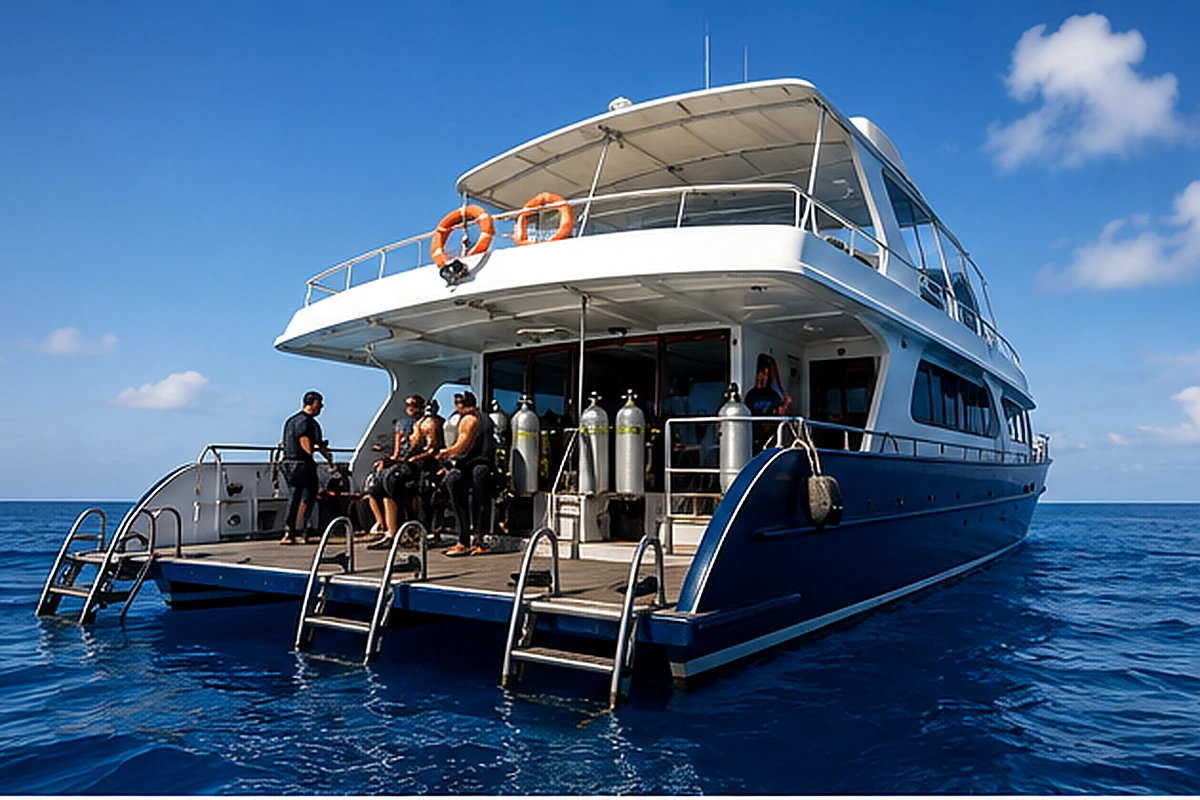
The Bahamas can offer extraordinary visibility, but every buddy team still needs a clear route, turning point and return plan.
Why can the Bahamas be easier for self-guided diving?
Visibility in the Bahamas can be exceptional, sometimes reaching around 50 metres. On many dives, that means you may be able to see the boat or its position when you turn back.
For an Open Water diver, a sensible strategy can be to stay close to the vessel and make a conservative circle around it when the briefing, current and site layout allow. You do not need to cross the entire reef to have a good dive. The clear water, sand and light can be part of your navigation picture.
Excellent visibility does not remove the risk
Conditions change. Current can move you, the boat may be less visible from behind reef structure and another vessel may look similar underwater. Keep using your compass, depth, time, gas and buddy checks.
What should you ask during the dive briefing?
A good briefing gives you the information needed to make your own decisions. Listen for the route, depth, current, turn point, return direction, mooring position, pickup plan and what to do if you surface away from the boat.
- Is this a return-to-boat dive or a pickup dive?
- Which direction should we start?
- What is the recommended turning point?
- Where is the mooring or descent line?
- What current should we expect?
- What should we do if we lose the boat reference?
If the briefing is unclear, ask before entering. There is no prize for pretending you understood.
When should you skip the dive?
Skip the dive when the route depends on skills you do not yet have, when your buddy plan feels unreliable or when the conditions are different from what you expected. You can also stay near the boat and make a shorter dive if that option is approved in the briefing.
A missed dive is disappointing for a few minutes. Feeling lost underwater can change the whole trip. Good divers are not the ones who enter every time. Good divers recognise when the plan is not right for them.
What core safety rules matter most without a guide?
Without a guide, your buddy team runs the dive, so a few standard habits matter more than usual:
- Agree a lost-buddy plan. If you separate, search for about one minute, then surface safely and reunite on the surface. Agree this in the briefing, before you get in.
- Carry and know how to deploy a surface marker buoy (DSMB). On drift and open-water dives it lets the boat see you when you ascend. Agree the pickup plan with the crew.
- Plan your gas and turn the dive early. Decide a turn pressure before the dive, keep a reserve and start heading back well before you reach it, so you return to the boat or ascent point with air to spare.
- Do a proper buddy check and dive your own limits and computer. If you are rusty, a refresher such as PADI ReActivate before the trip is worthwhile, and the PADI Underwater Navigator specialty builds the exact skills self-guided diving needs.
Frequently asked questions
Do liveaboards always provide an in-water dive guide?
No. Many liveaboards brief certified divers and then allow buddy teams to dive independently.
Can a fresh Open Water diver join a self-guided liveaboard?
Possibly, but the diver should choose an easy itinerary, stay conservative and have a reliable buddy or enough navigation skill to return safely.
Should you pay for a private guide?
Only after confirming exactly what the guide will do. Ask whether the guide leads the full dive and stays with your buddy team.
What is the best preparation for self-guided diving?
Practise compass headings, reciprocal headings and natural navigation in familiar water before the trip.
Is the Bahamas suitable for a newer diver?
Some Bahamas routes can be suitable because the diving may be straightforward and visibility can be excellent. The lack of an in-water guide can still be a challenge.
Can you stay close to the liveaboard?
When the site, current and briefing allow it, staying near the boat and making a conservative circle can be a sensible plan.
Plan the trip around your real independence
Before booking, compare the itinerary with the diver you are now, not the diver you hope to become during the holiday. Read the first liveaboard guide, then check whether the route belongs among the advanced liveaboard routes.
Find a liveaboard that matches your experience
Compare destinations, routes, certification requirements and logged-dive expectations before you book.
Search liveaboards by experience Explore Bahamas liveaboardsSources and references
- Diving in the Bahamas | PADI
- Liveaboard Diving in the Bahamas | PADI Travel
- PADI Advanced Open Water Diver Course
- Know Before You Go: How to Plan Your Dive Trip | Divers Alert Network
This safety article is based on operational liveaboard notes supplied by M and must be reviewed by the author before publication. Questions: [email protected]