First liveaboard guide
What Should You Expect on Your First Liveaboard?
Your first liveaboard is a multi-day diving trip where you sleep, eat and dive from the same vessel. The right trip can give you more diving and easier access to remote sites, but it must match your certification, logged dives, comfort in current, cabin needs and budget.
What is the quick answer?
A first liveaboard should feel organised, not overwhelming. Choose a beginner-friendly route, check the required experience, understand the daily schedule and confirm what is included before you book.
Can you pack for a liveaboard without forgetting a thing?
Before your first trip, test yourself with The Liveaboard Packing Run, our quick free game. Grab the right dive gear as it flies past, pick the reef-safe sunscreen (choose the wrong one and the reef pays for it), then find the correct boat on the busy harbour by matching its name and itinerary. Make it aboard fully kitted and giant-stride into the blue. It takes a minute, it is a bit silly, and it teaches the two things every new liveaboard diver needs: what to pack, and how to spot the right boat.
 ▶
Play The Liveaboard Packing Run
Opens full screen · best in landscape
▶
Play The Liveaboard Packing Run
Opens full screen · best in landscape
Free · takes a minute
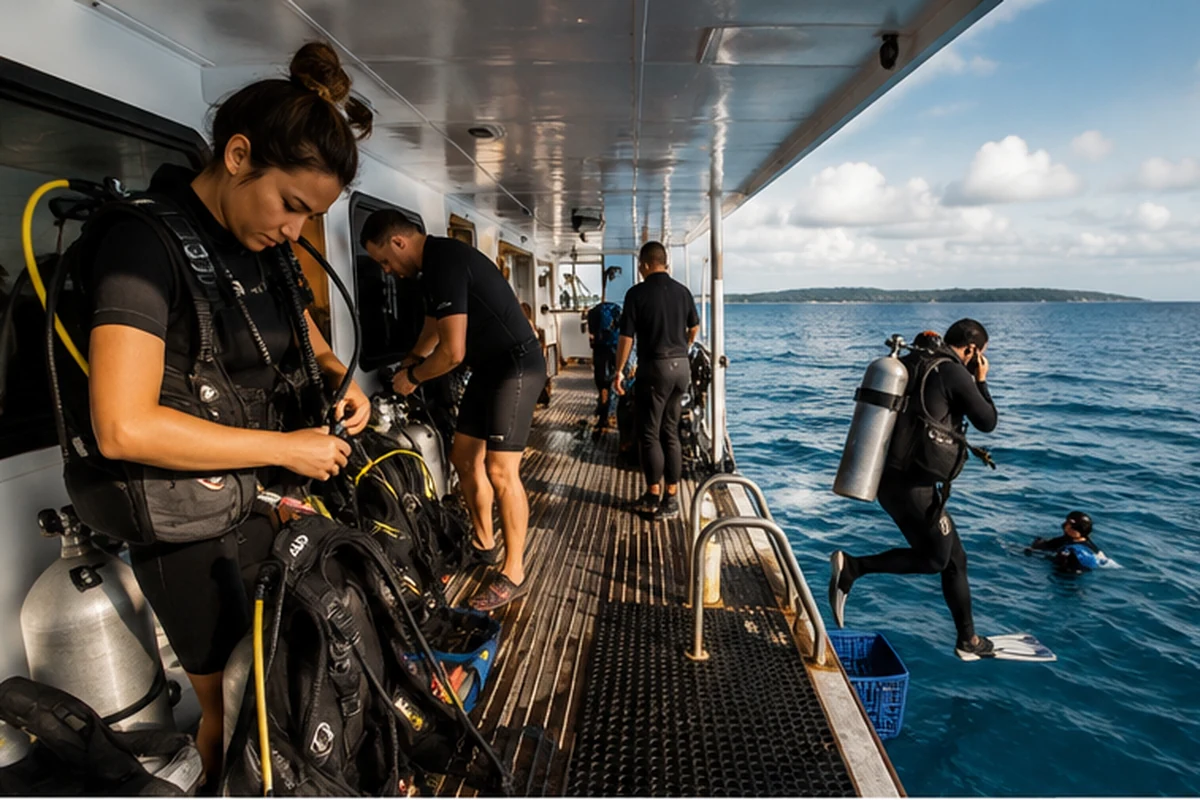
A well-run dive deck gives every diver a clear station, a predictable routine and time to prepare without rushing.
How does a liveaboard day work?
Most days follow a repeated cycle: briefing, dive, food, rest and preparation for the next dive. The schedule may begin early and can include three or four dives, but the exact programme depends on the itinerary, sea conditions and local rules.
| Typical time | What happens | What a first-time guest should know |
|---|---|---|
| Early morning | Wake-up call, briefing and first dive | Prepare your mask, computer and exposure protection the night before. |
| Morning | Breakfast, surface interval and second dive | Drink water, log the dive and check your remaining gas and computer status. |
| Afternoon | Lunch, rest and another dive | Do not let the group schedule pressure you into diving when tired or unwell. |
| Evening | Dinner, possible night dive and next-day briefing | Night diving may be optional. Ask before booking if it matters to you. |
What is life on a liveaboard actually like?
A liveaboard is an adventure where the diving comes to you. Because you dive three or four times a day, your logged dives and confidence climb quickly, and a single week can add more experience than months of occasional day trips.
You set your equipment up once at the start of the trip and it stays assembled on your own station for the whole liveaboard, so there is no carrying tanks or rebuilding your kit every morning. The crew refills your cylinder between dives while you rest.
You also live aboard the entire time and rarely step onto land. In exchange you reach remote dive sites that day boats cannot, and you often see more varied marine life across one itinerary. Meals, briefings and downtime are shared, so you meet like-minded divers from all over the world, and many people leave a liveaboard with new friendships.
Nitrox on your first liveaboard
Diving three or four times a day is where Nitrox earns its place: the richer oxygen mix gives you a bigger safety margin and can extend your no-decompression time across a busy schedule. If it is your first liveaboard you can usually take the Nitrox course on board and use it for the rest of the trip. See our guide on whether you should dive with Nitrox on a liveaboard for how it works and when it is worth it.
What certification and experience do you need?
The answer depends on the route, not only the boat. A calm reef itinerary may suit an Open Water diver, while deep walls, offshore crossings, strong current, negative entries or blue-water ascents may require Advanced Open Water training and more logged dives.
Do not choose by destination name alone
Two liveaboards in the same country can offer very different diving. Check the exact itinerary, maximum depth, current, entry method, surface conditions and minimum logged dives.
Be realistic about your recent experience. A diver with many old logged dives may still need a refresher before a demanding itinerary. Good buoyancy, calm mask clearing, controlled ascents and reliable buddy awareness matter more than trying to impress the group.
Where do you sleep on a liveaboard?
You normally sleep in a compact cabin with an ensuite or shared bathroom. Cabins may have twin beds, a double bed, bunk beds or flexible bedding, and some are below deck with limited natural light.
Liveaboard cabins vary a lot by operator and budget. Not every liveaboard is a luxury yacht: some have simple bunk beds in a small shared cabin, while others give you two spacious beds side by side or a private double with a window. If you travel solo, some operators will place you in a same-gender shared cabin so you avoid the single supplement, but not all boats offer this, so check each one before booking and compare cabin types on DiveScanner.
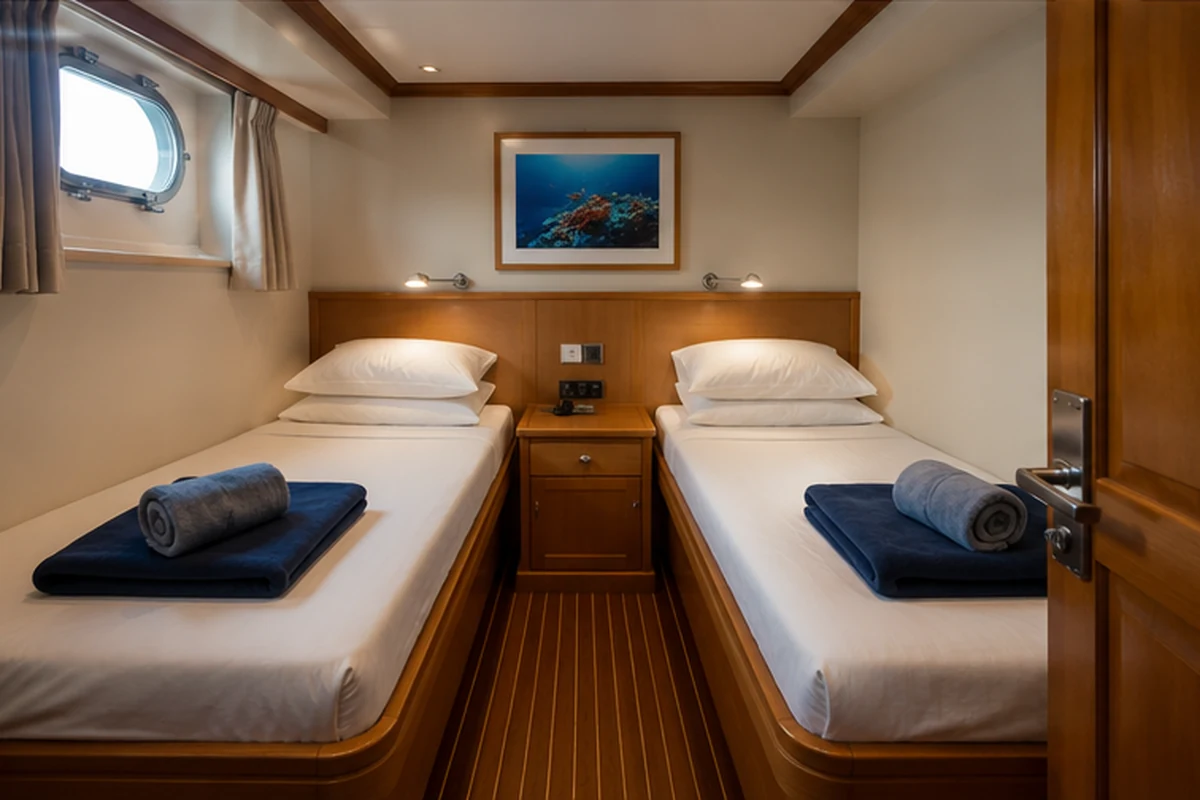
Cabin size and layout vary. Confirm bedding, bathroom type, deck level, ventilation and single-supplement rules before paying.
What should you check before booking?
Check the complete trip conditions, not only the headline price. The most important questions concern diver suitability, cabin arrangements, equipment, transfers and extra charges.
| Check | Why it matters |
|---|---|
| Certification and minimum dives | The itinerary may be unsuitable even when the boat accepts your certification card. |
| Exact route | Conditions and dive difficulty can change significantly between itineraries. |
| Cabin type | Twin-share, double, bunk and solo-use arrangements can have different prices. |
| Nitrox | Confirm whether it is available, included, extra or restricted to certified divers. |
| Rental equipment | Sizes, availability, computers and surface signalling equipment must be confirmed in advance. |
| Transfers and port fees | Airport transfers, marine-park fees, fuel surcharges and gratuities may not be included. |
| Cancellation rules | Liveaboard trips often have stricter payment and cancellation conditions than day diving. |
How much do you tip on a liveaboard?
Crew gratuities are usually not in the headline price, and the amount depends on the boat, the operator and the country. As a rough guide, many divers budget around 10 to 20 percent of the whole trip cost. Cash is normally preferred and shared among the whole crew, who often double as your divemasters, cooks and hosts. Check whether tips are already included before you travel.
What should you pack for your first liveaboard?
Pack light, but do not leave essential dive and safety items to chance. Bring your certification cards, insurance details, travel documents, exposure protection, mask, computer and any personal equipment you rely on for comfort or fit.
Useful first-liveaboard packing list
- Certification cards and logbook access
- Dive computer and charger or spare battery
- Mask, snorkel and prescription lens if needed
- Exposure suit suitable for the destination and season
- DSMB and reel when required by the route
- Reef-safe toiletries and sun protection
- Personal medicines and seasickness medication discussed with a medical professional
- Reusable water bottle
- Small dry bag and a few clothes for evenings
What are the most common first-liveaboard mistakes?
The biggest mistake is choosing a famous route that exceeds your current ability. Other common problems include overpacking, ignoring seasickness, skipping hydration, rushing equipment checks and feeling pressured to complete every dive.
Trying to do every dive
You are allowed to rest. Fatigue, cold, dehydration and poor sleep can make the next dive less safe and less enjoyable.
Assuming all costs are included
Read the inclusions carefully. Nitrox, rental gear, marine-park fees, port charges, transfers, alcohol and gratuities may be charged separately.
Ignoring cabin-sharing details
Solo travellers may be paired with another guest or charged a single supplement for private use. Confirm the rule before booking.
How do you choose the right first liveaboard?
Start with your real diving profile: certification, logged dives, recent diving, current comfort, maximum comfortable depth and whether you want reefs, wrecks, sharks or relaxed scenic diving. Then compare only trips that match those limits.
For a first trip, a route with moderate depths, manageable current, clear briefings and flexible dive participation is usually a better choice than a remote advanced itinerary. You can explore destination options through the DiveScanner liveaboard search and compare them by month, certification and experience.
For a destination with a broad mix of routes and experience levels, see the Egypt liveaboard options. Always check the individual itinerary rather than assuming every Red Sea route is beginner-friendly.
Frequently asked questions
Is a liveaboard suitable for a newly certified diver?
Some are. Choose a calm route with suitable depth, current and entry methods, and confirm the operator's logged-dive requirements before booking.
How many dives do you do on a liveaboard?
Many itineraries schedule three or four dives per day. Weather, crossings, local restrictions and arrival or departure times can reduce the number.
Do you need Nitrox for a liveaboard?
Not always. It can be useful for repetitive diving, but you must be certified to use it and stay within your training and computer limits.
What should you pack for your first liveaboard?
Bring travel documents, certification proof, personal medicines, exposure protection, your preferred dive equipment, sun protection and a small amount of comfortable clothing.
Can you skip a dive on a liveaboard?
Yes. Skip a dive whenever you are tired, cold, unwell, uncomfortable with the conditions or unsure that it is within your training and experience.
Sources and references
- PADI Travel: Liveaboard Diving
- PADI Enriched Air (Nitrox) Diver Course
- PADI ReActivate Scuba Refresher
- Divers Alert Network: Know Before You Go
- Divers Alert Network: Flying After Diving
Ready to compare your first liveaboard?
Match trips to your destination, month, certification, logged dives and preferred marine life before you book.
Compare liveaboards Explore Egypt liveaboardsQuestions about DiveScanner articles: [email protected]