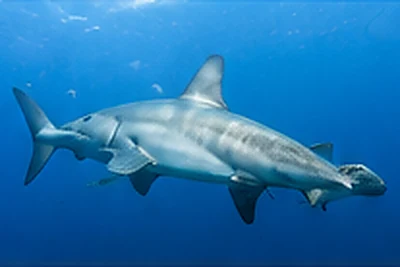
Scalloped hammerhead shark
The classic Darwin and Wolf image. Not one shark for a photo, but schools moving through current like the site belongs to them.

Galapagos is not another blue-water destination with a nice list of animals.
It feels different because the animals are different. Marine iguanas graze underwater like small dragons. Penguins shoot past in tropical water. Sea lions look you straight in the mask like they have been waiting to play. Then, on the same liveaboard diving itinerary, you can be holding position in current while hammerheads, whale sharks, manta rays and mola mola move through the blue.
That is why Galapagos needs its own marine life guide. Not a generic list. A proper look at the species that make the islands feel like another world.
The most significant Galapagos liveaboard marine life includes scalloped hammerhead sharks, whale sharks, marine iguanas, giant manta rays, Galapagos penguins, Galapagos sea lions, mola mola and endemic reef fish. Darwin and Wolf are the big-pelagic sites. Fernandina, Isabela and Cabo Douglas are where the truly strange Galapagos animals become the story.
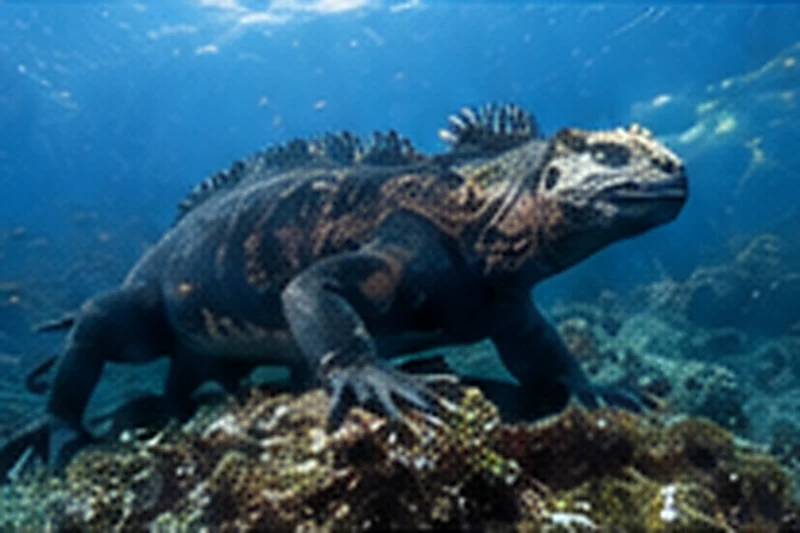
Marine iguanas are the image that explains Galapagos better than any brochure: prehistoric, calm, strange and completely part of the underwater world.
This guide is built for divers comparing Galapagos liveaboard itineraries by marine life, season, site and dive level. If your question is "what makes Galapagos worth the distance and price?", the answer is not one animal. It is the mix: endemic species close to shore and large pelagics in current, often on the same trip.
The Galapagos Islands sit where major ocean currents meet. Cold, nutrient-rich water pushes up from below. Warmer water arrives from the tropics. The result is not soft coral postcard diving. It is volcanic rock, surge, current, colder water and an absurd amount of life.
For a diver, that matters. You do not go to Galapagos expecting easy reef drifting and pretty coral gardens. You go because the ocean is working there. You feel it in the current, in the thermoclines, in the way animals appear suddenly from the blue.
PADI Travel describes Galapagos diving as dominated by marine life, with diving iguanas, Galapagos penguins, sea lions, Galapagos sharks, schooling hammerheads, whale sharks and mantas all part of the destination profile. LiveAboard also notes that Darwin and Wolf are only accessible by liveaboard and are known for hammerheads, silky sharks, manta rays and whale sharks.
This is the part divers need to understand before booking. Galapagos is not just "lots of animals." It is species behaviour shaped by isolation, volcanic landscape and current.
These are the animals I would build the article around because together they explain why Galapagos liveaboard diving is so different from the Red Sea, Maldives, Thailand or Raja Ampat.
The classic Darwin and Wolf image. Not one shark for a photo, but schools moving through current like the site belongs to them.
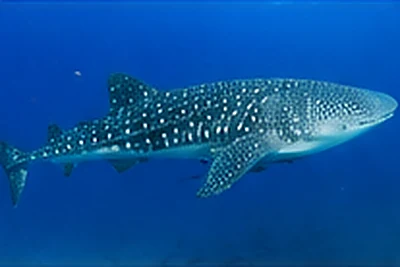
The cool-season giant. Around Darwin and Wolf, whale sharks are one of the reasons divers accept colder water and stronger conditions.
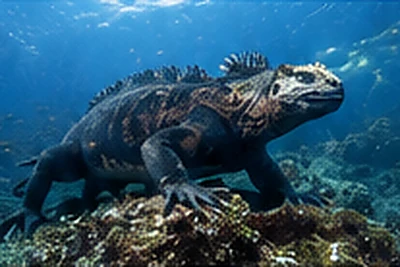
The only sea-going lizard. This is the animal that makes Galapagos feel prehistoric underwater.
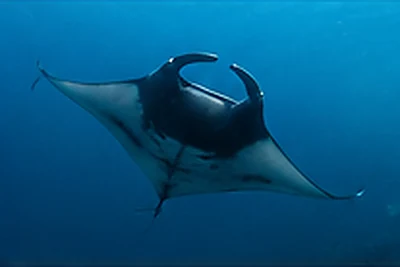
Mantas are not the only reason to go, but when they arrive at cleaning stations or pass in the blue, everything on the dive slows down.
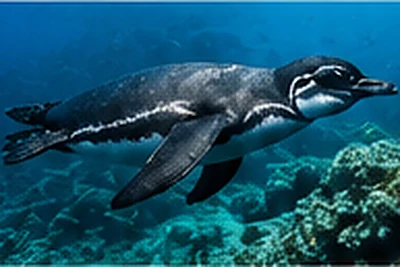
A penguin in tropical latitude still feels wrong the first time you see it. That is exactly why it belongs in this guide.
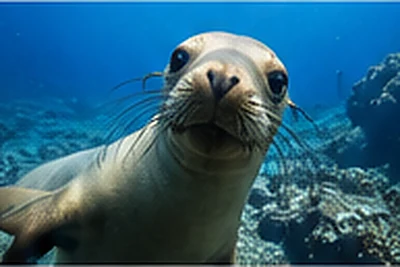
Playful, fast and very aware of you. Sea lions can turn an ordinary safety stop into the dive you talk about later.
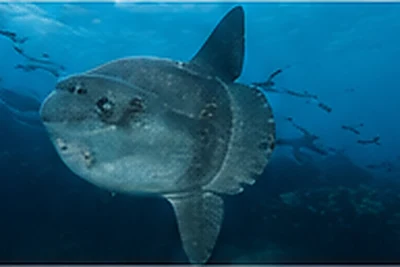
Strange, huge and not predictable. A mola mola sighting feels like the ocean decided to show you something odd on purpose.
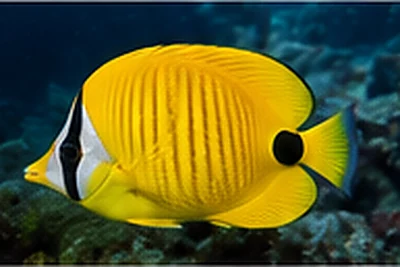
The small reef fish matter too. Galapagos is not only big animals. Look at the rocks and you see the local ecosystem working.
Hammerheads are the animal most divers imagine when they hear "Galapagos liveaboard." I understand why. A single hammerhead is already impressive. A school of scalloped hammerheads moving through current is something else.
Darwin and Wolf are the key names here. LiveAboard describes the underwater area around those islands as a highway for scalloped hammerheads, with silky sharks, Galapagos sharks, mantas and whale sharks also passing through. That is the right way to think about it. You are not visiting a reef aquarium. You are positioning yourself on a pelagic highway and waiting for the ocean to move past.
This is also why Galapagos is not the place for fake confidence. Current, surge, blue-water exits and negative entries can be part of the trip. If you are not comfortable holding position, listening to the briefing and staying with the group, build experience somewhere easier first.
Whale sharks in Galapagos are not the same experience as a shallow lagoon snorkel. Around Darwin and Wolf, they are part of the big-current, big-ocean story.
The cooler season from June to November is usually the stronger whale shark period. That season can also mean colder water, rougher sea conditions and stronger currents. This is the trade-off divers need to understand. The months that bring the giants can also bring the conditions that test you.
As a dive instructor, I would rather a diver know this before booking than arrive surprised and uncomfortable. Galapagos rewards prepared divers. It does not soften itself because someone paid for an expensive trip.
For me, marine iguanas are the most Galapagos animal in the water.
Sharks are amazing, but you can see sharks in many places. Mantas too. Whale sharks too. A marine iguana feeding underwater on algae is different. It looks ancient. It looks slightly impossible. It also makes sense only here.
Marine iguanas are endemic to Galapagos and are the only lizards adapted to feed in the sea. At sites such as Cabo Douglas, divers can watch them graze on the rocks. That is not just a wildlife tick. It is the reason Galapagos feels like evolution is happening in front of you.
Mantas are a reminder that good wildlife diving is not chasing.
In Galapagos, mantas can appear around cleaning stations and current lines. When they circle, come close or pass through the group, the best diver in the water is usually the calmest one. Not the one swimming forward with a camera. Not the one trying to own the moment.
Stay still. Watch your bubbles. Give space. If the manta wants to stay, it will stay. If it leaves, let it leave. That is the rule for Galapagos wildlife in general.
The Galapagos penguin is one of the species that makes divers stop thinking normally for a second.
A penguin underwater usually belongs in your mind with cold places. Then you are in Ecuador, close to the equator, and one cuts through the water like a small torpedo. That is Galapagos.
Penguins are most strongly associated with the cooler western side of the archipelago, especially areas around Fernandina and Isabela. You do not book Galapagos only for penguins, but when they appear, they are unforgettable.
Sea lions can make a dive feel joyful very quickly.
They twist, turn, come close, disappear, then come back again as if they are testing how slow and clumsy we are. A young sea lion can make even a serious diver smile into the regulator.
But playful wildlife still needs respect. Do not reach for them. Do not block them. Do not try to make the interaction bigger than it is. Let them control the distance. If they come close, enjoy it. If they leave, leave it there.
Mola mola, or sunfish, are not guaranteed. That is part of why divers remember them.
They look unfinished, like the ocean started making a fish and then changed its mind. Large, flat, slow-looking, and somehow powerful. In Galapagos they are more associated with the cooler, nutrient-rich side of the season.
Do not sell Galapagos to yourself as a guaranteed mola mola trip. Sell it as a place where strange things are possible if the conditions line up.
Galapagos marketing often talks about the big animals. That is normal. Hammerheads sell. Whale sharks sell. Marine iguanas make people stop scrolling.
But underwater, the smaller reef life also tells you where you are. Yellow butterflyfish, blennies, reef fish, eels, turtles, salema, rays and life tucked into volcanic rock all matter because Galapagos is not built like a coral-garden destination.
Look closer and you stop treating the trip as only a big-animal checklist. That is when the place starts to feel real.
Galapagos diving is possible all year, but the animals and conditions shift. Do not choose the season only by one species. Choose it by species, water temperature, current and your own comfort.
| Season | Months | Marine life focus | Conditions | Best for |
|---|---|---|---|---|
| Warm season | December to May | Hammerheads, mantas, sea lions, turtles, reef fish and generally active marine life | Warmer water, calmer seas, often easier surface conditions | Divers who want Galapagos but are worried about cold and rougher water |
| Cool season | June to November | Whale sharks around Darwin and Wolf, hammerheads, mola mola, penguins and nutrient-rich encounters | Colder water, stronger current, more demanding conditions | Confident divers chasing the strongest big-animal season |
| Year-round | All months | Sea lions, marine iguanas in the right areas, turtles, reef fish, rays, sharks and volcanic reef life | Variable visibility, surge and current | Divers who understand Galapagos is about the whole ecosystem, not one guarantee |
| Area | What it is known for | Diver note |
|---|---|---|
| Darwin and Wolf | Scalloped hammerheads, whale sharks, Galapagos sharks, silky sharks, manta rays and big blue-water action | Advanced liveaboard diving. Expect current, depth and exposed conditions. |
| Cabo Douglas, Fernandina | Marine iguanas, Galapagos penguins, cormorants and strange cold-water shore life | One of the most unique wildlife stops. Do not skip it mentally because it is not only sharks. |
| Isabela western sites | Penguins, mola mola possibility, colder water and volcanic landscape | Better for divers who accept colder water for unique species. |
| Cousins Rock and central sites | Sea lions, rays, reef fish, turtles, black coral, cleaning stations and photography subjects | Often a good contrast after the heavy Darwin and Wolf days. |
Galapagos liveaboard diving is not beginner-friendly in the way Thailand or some Red Sea routes can be beginner-friendly.
Many liveaboards expect Advanced Open Water and around 50 logged dives. That is not gatekeeping. It is because the diving can include current, surge, colder water, deep profiles and fast changes in conditions.
If you are still learning buoyancy, still uncomfortable with blue water, or still using too much air because you are stressed, do not rush Galapagos. There is no shame in building experience first. The shame is pretending you are ready and then becoming the problem underwater.
Galapagos is not the place to fake comfort. If your main goal is to see big animals, good. But your first responsibility is still control: buoyancy, breathing, buddy awareness, depth, current and listening to the guide.
Animals in Galapagos can seem unusually calm around people. That is not permission.
Do not touch marine iguanas. Do not chase sea lions. Do not swim at penguins. Do not block turtles. Do not push toward mantas or sharks for a better camera angle. Do not collect anything from the reef or rocks. Follow the guide and the park rules.
Galapagos is protected because it needs protection. The fact that wildlife allows us to be close does not mean we earned the right to behave badly.
Before booking, check the itinerary, not only the boat name.
If the description says "Galapagos wildlife" but does not tell you where the boat goes, ask. Galapagos is too expensive to book vaguely.
Do not reduce Galapagos to hammerheads.
Hammerheads are incredible, yes. Whale sharks too. But the real uniqueness of Galapagos is the collision of worlds: reptiles feeding underwater, penguins in tropical latitude, sea lions playing through volcanic channels, mola mola appearing from cold water, and pelagics moving through current like the ocean has opened a road.
That is why Galapagos is not just another liveaboard diving destination.
It is one of the few places where you come back with a different idea of what marine life can be.
Compare Galapagos liveaboardsA few Galapagos liveaboards to start with, each shown with real, current prices from every provider that sells it:
Marine iguanas and Galapagos penguins are the most unique for many divers because they feel so different from normal tropical diving. Darwin and Wolf add the big-pelagic side with schooling hammerheads and seasonal whale sharks.
Yes, especially around Darwin and Wolf in the cooler season from June to November. Sightings are never guaranteed, but this is the stronger whale shark window.
No wildlife is guaranteed. Galapagos is one of the best places for schooling scalloped hammerheads, especially around Darwin and Wolf, but conditions, season and luck still matter.
Most Galapagos liveaboards are better for advanced and confident divers. Many expect Advanced Open Water and around 50 logged dives because of current, surge, depth and exposed conditions.
Cabo Douglas on Fernandina is one of the best-known liveaboard itinerary stops for underwater marine iguanas. They feed on algae and are one of the most unusual encounters in Galapagos diving.
This guide uses destination and species notes from PADI Travel Galapagos, Galapagos species references and dive-planning guidance for Darwin, Wolf, Cabo Douglas and the main seasonal windows. Galapagos conditions and sightings vary. Always check the exact liveaboard itinerary, month, certification requirement, logged-dive requirement and wildlife expectations before booking.