
Reef and oceanic manta rays: why some mantas are bigger
19 July 2026
Many divers fly to the Maldives to swim with giant mantas, then meet mantas that feel smaller than the ones in the photos. Nothing is wrong. The Maldives is a reef manta destination, and reef mantas are smaller than the giant oceanic mantas you see elsewhere. Here is the difference, and where, when and how deep to meet each one.
Quick answer
There are two manta species. The reef manta reaches about 3 to 4 metres across. The giant oceanic manta reaches about 7 metres. The Maldives, Raja Ampat and Komodo cleaning stations are mostly reef mantas. The true giants live in the open ocean, at sites like Socorro, Misool in Raja Ampat, and occasionally the offshore Red Sea.
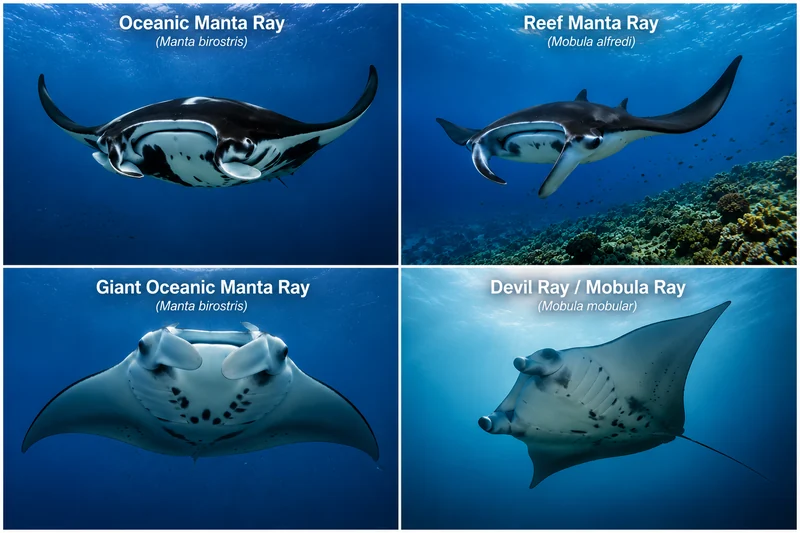
Graphic: DiveScanner. The manta and mobula species divers most often meet, side by side.
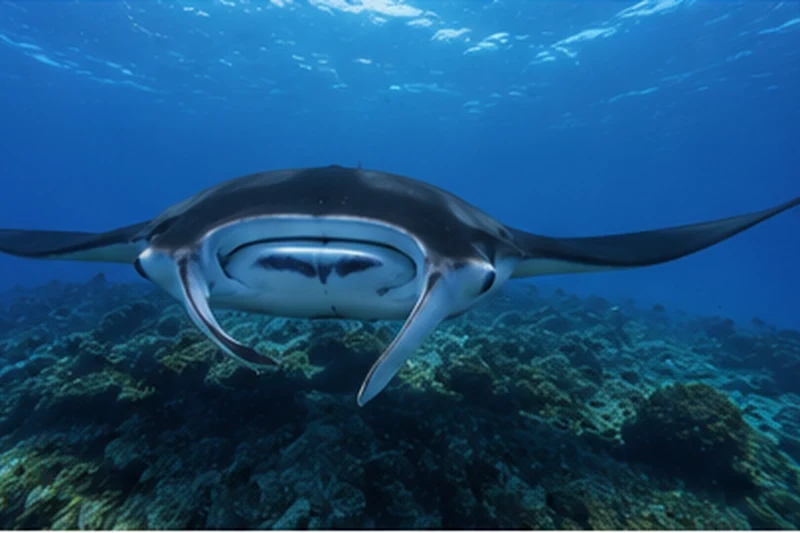
Photo: DiveScanner. A reef manta at a coral reef cleaning station.
The two manta species
Mantas belong to the mobula family. Divers meet two of them.
Reef manta (Mobula alfredi): the one you see most, wingspan around 3 to 4 metres. It stays near reefs, lagoons and coastal cleaning stations, so it is reliable and often shallow. The Maldives, Raja Ampat and Komodo are reef manta strongholds.
Giant oceanic manta (Mobula birostris): the giant, and the largest ray in the ocean, up to about 7 metres. It roams the open ocean and visits offshore pinnacles, so it is met less often and usually in blue water. This is the manta in most of the huge photos.
A third type, the Atlantic or Caribbean manta, is proposed but not yet fully confirmed as its own species.
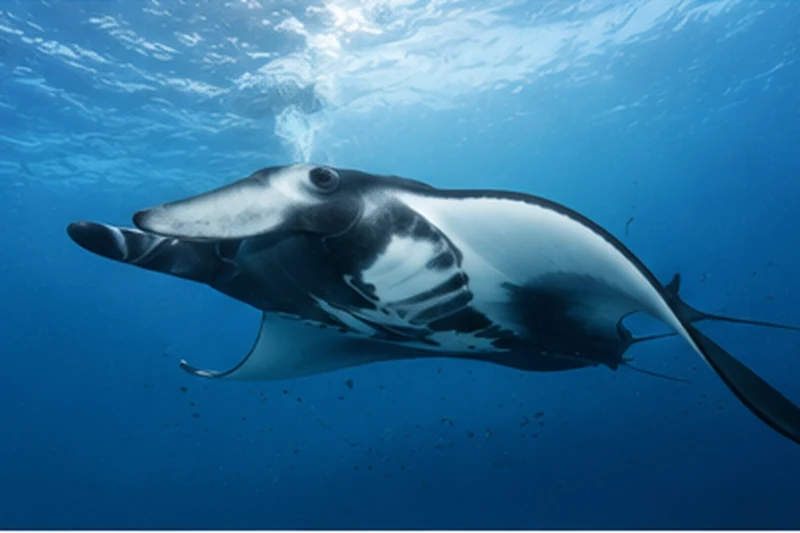
Photo: DiveScanner. A giant oceanic manta in blue water.
Why the oceanic manta is bigger
Size follows the life it leads. The reef manta is a resident coastal animal that stays near its reefs, so it does not need to be huge. The oceanic manta crosses open water, travels long distances and drops into colder, deeper water. A larger body helps it travel and hold its temperature. The ocean built the giant, the reef built the smaller one.
How to tell them apart underwater
- Size. A manta clearly wider than about 4 metres is almost certainly an oceanic manta.
- Mouth colour. Oceanic mantas usually have a dark, black rimmed mouth. Reef mantas have a paler mouth.
- Shoulder markings. Oceanic mantas have sharp white shoulder patches that form a T. Reef mantas have a softer Y shape.
- Where you are. On a coastal cleaning station it is a reef manta. In open blue water off a remote pinnacle it is likely oceanic.
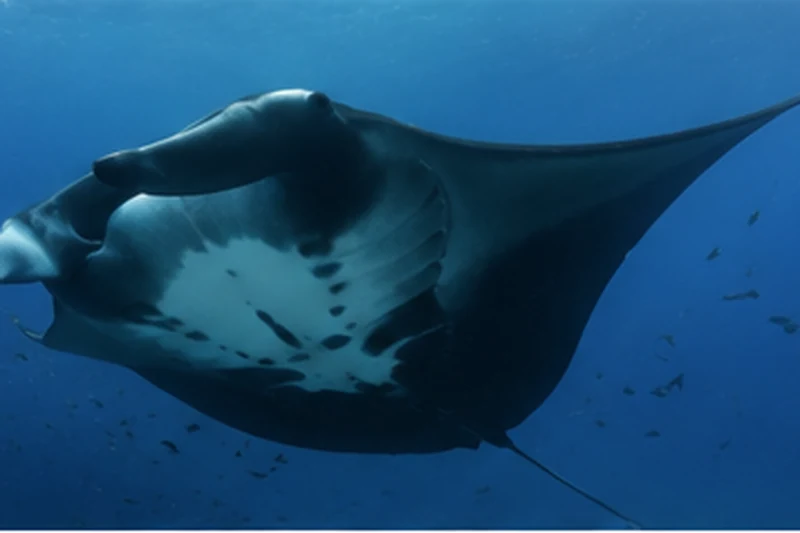
Photo: DiveScanner. The underside of a giant oceanic manta. The spot pattern on the belly is unique to each animal.
The wider family: mobula devil rays
Both mantas were reclassified into the mobula genus, which also holds the smaller devil rays. These are the fast, flying rays you may see in big schools, such as Munk's devil ray in the Sea of Cortez, the spinetail devil ray, and the sicklefin devil ray around the Azores. Smaller than mantas, but the schools are one of diving's great sights.
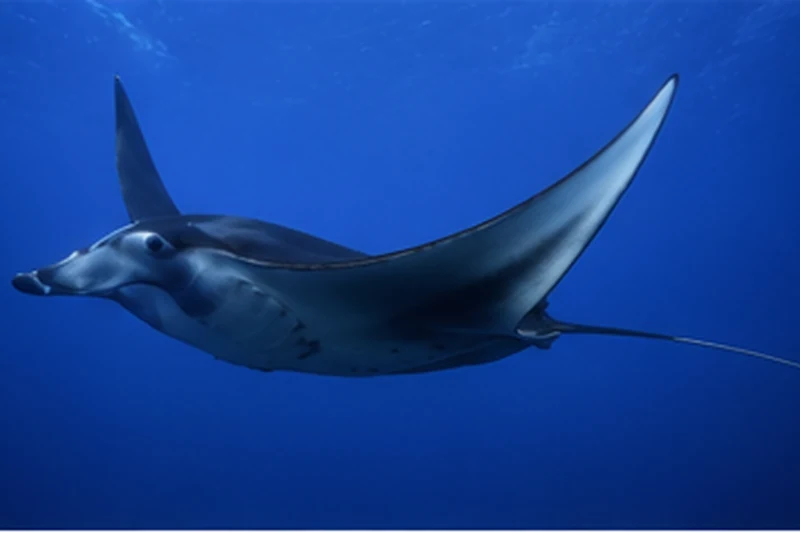
Photo: DiveScanner. A mobula devil ray, the mantas' smaller cousin.
Where, when and how deep to see each manta
| Manta | Best destinations | Typical depth | Season |
|---|---|---|---|
| Reef manta | Maldives (Hanifaru, cleaning stations) | 5 to 20 m | June to November peak, year round at stations |
| Reef manta | Raja Ampat (Dampier Strait) and Komodo | 5 to 20 m | Raja Ampat October to April, Komodo April to November |
| Reef manta | Thailand (Koh Bon) | 15 to 25 m | November to May, best February to April |
| Giant oceanic manta | Socorro, Mexico | 10 to 30 m, blue water | November to May |
| Giant oceanic manta | Misool in Raja Ampat, and Komodo offshore | 10 to 30 m | October to April |
| Giant oceanic manta | Red Sea offshore reefs, occasionally | 10 to 30 m | Summer to autumn |
If you want the giants, plan an oceanic manta trip. If you want reliable, close, shallow mantas, the Maldives reef mantas are hard to beat, just know they are the smaller kind. For more on manta seasons, read where to see manta rays on a liveaboard, the best time to dive the Maldives, and the Raja Ampat diving season guide.
Plan your manta trip
Decide which manta you are after, then match the destination to the month and to your dive level. DiveScanner compares real, current prices from every operator and agency for each boat, so you find the best manta departure without checking each booking site yourself.
Open the search, choose manta rays and compare liveaboardsFAQ
Why are the mantas in the Maldives smaller?
The Maldives is famous for reef mantas, about 3 to 4 metres. They are smaller than the giant oceanic manta, about 7 metres, which lives in the open ocean at Socorro, Misool in Raja Ampat and the offshore Red Sea.
What is the difference between reef and oceanic mantas?
Reef mantas stay near reefs and reach about 3 to 4 metres. Oceanic mantas roam the open ocean and reach about 7 metres, with a darker mouth and different shoulder markings.
Where can I dive with giant oceanic mantas?
Socorro in Mexico, Misool in Raja Ampat, Komodo, and occasionally the offshore Red Sea, usually between about 10 and 30 metres.
How deep do you dive with mantas?
Reef mantas are often shallow, 5 to 20 metres. Oceanic mantas are usually a little deeper, 10 to 30 metres.
Sources and planning notes
This guide uses established manta ray biology and seasonal patterns for each destination. Wildlife sightings vary year to year with plankton, current and weather, so always check the current itinerary and conditions before booking. Questions? Contact us at [email protected].