The UV index tells you how strong the sun's ultraviolet radiation is. On a liveaboard, that number matters because divers spend long days on open water, between dives, often close to the equator.
A high UV day can ruin several dive days if you treat it like normal beach sun.
Download the UV protection checklist
A one-page packing and daily routine sheet. Print it or save it on your phone, then check the UV index before breakfast.
The UV index is a simple scale that shows how strong ultraviolet radiation is at a specific time and place. The higher the number, the faster unprotected skin and eyes can be damaged. Sun protection is recommended when the UV index is 3 or above. UV 8 to 10 is very high. UV 11 or higher is extreme.
On a liveaboard, UV matters more because you are outside for long surface intervals, close to reflective water, often in tropical regions, and usually wearing swimwear or a thin rashguard for much of the day.
If you only check temperature, you can miss the real problem. A breezy, cloudy boat day can still have high UV.
What is the UV index?
The UV index measures the strength of sunburn-producing ultraviolet radiation reaching the ground. It is not a heat index. It does not tell you how hot the air feels. It tells you how risky the sun is for skin and eyes.
That is why a diver can burn badly on a cool boat deck or while swimming in clear water. The sun may not feel harsh, but the radiation can still be high.
UV index scale
0 to 2 Low
3 to 5 Moderate
6 to 7 High
8 to 10 Very high
11+ Extreme
For divers, the key number is 3. Once the UV index reaches 3 or above, plan real protection instead of one quick layer of sunscreen before breakfast.
Why UV is stronger on liveaboards
Water reflects UV and increases exposure.
White decks, metal rails and wet surfaces bounce light around.
Divers are exposed before dives, after dives and during surface intervals.
Many liveaboards run in tropical regions where UV can be high all year.
Thin or broken clouds can still let strong UV through.
What time is UV highest?
UV is usually strongest around the middle of the day. For liveaboard planning, treat 10 AM to 4 PM as the main risk window. In many tropical destinations, the hardest part of the day is often around 11 AM to 2 PM.
Maldives lesson
I was in the Maldives and swam for 3 hours from 11 AM to 2 PM. I saw UV index 12 and thought it was low because I did not know the scale. It was not low. It was extreme.
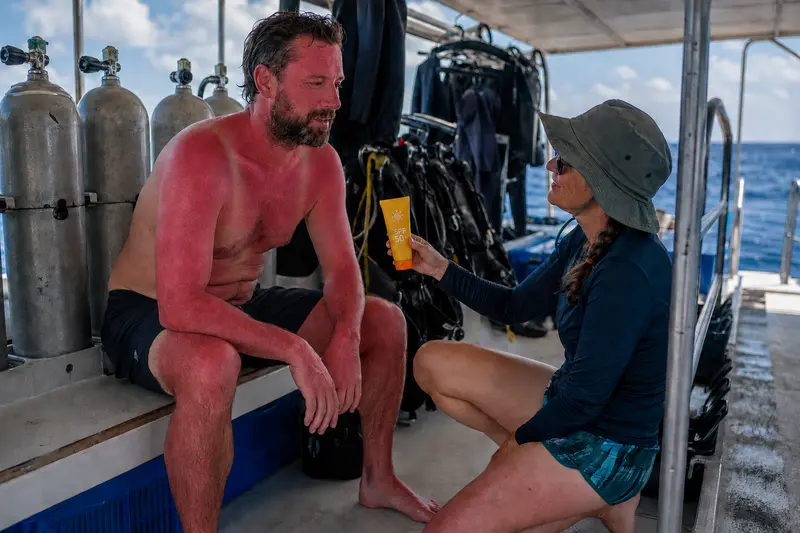
I ended up with burned skin for 3 days. Sitting and lying down hurt. I needed aloe vera and after-sun treatment cosmetics. The mistake was not the swimming. The mistake was not checking what the UV number meant.
Where and when UV is highest on liveaboard routes
This table is a planning guide, not a forecast. Check the daily UV index for your exact port, island or liveaboard route before and during the trip.
Liveaboard region
High-risk UV season
Peak hours
Why divers should care
Maldives
High all year, often harsh in clearer dry-season months from December to April
10 AM to 4 PM
Equatorial sun, clear water, long swim and snorkel breaks
Egypt, Red Sea
Late spring, summer and early autumn, roughly April to October
10 AM to 4 PM
Bright desert sun, open decks, very little natural shade
Thailand, Similan and Surin
Dry liveaboard season, especially February to April
10 AM to 3 PM
Clearer skies, tropical latitude, beach and dinghy time
Indonesia, Raja Ampat, Komodo, Banda Sea
High all year near the equator, with stronger exposure on clear days
10 AM to 3 PM
Equatorial routes, long boat transfers, exposed decks
Philippines, Tubbataha and Visayas
Dry and liveaboard windows, often March to June for Tubbataha
10 AM to 3 PM
Remote reefs, exposed crossings, strong midday sun
Australia, Great Barrier Reef
Spring and summer, roughly September to March
10 AM to 4 PM
Australia has very high UV levels and many dives happen in bright open water
Galapagos
High all year near the equator, often clearer from December to May
10 AM to 3 PM
Equatorial exposure, boat transfers and reflective water
How to protect your skin on a liveaboard
Before the dive day
Check the UV index, not only the weather.
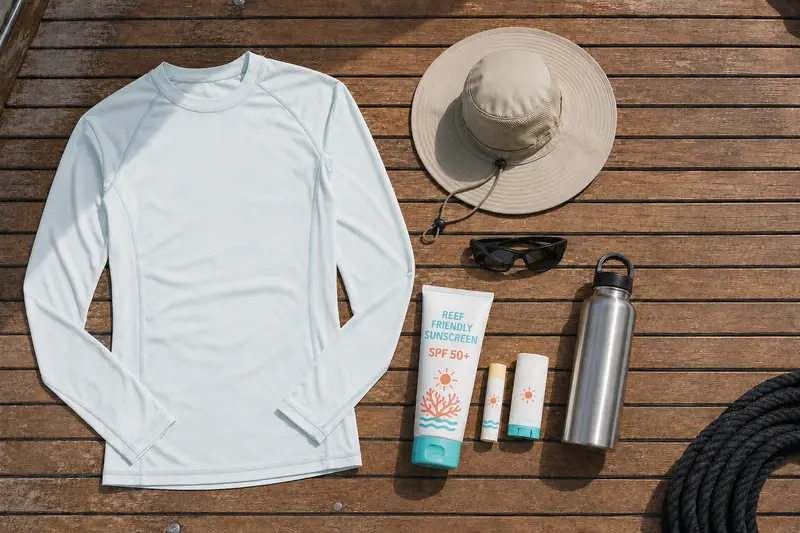
Pack UPF 50+ rashguards or swim shirts.
Bring UV leggings or a dive skin for long surface time.
Choose a wide-brim hat, legionnaire hat or cap with neck cover.
Pack wraparound sunglasses with UVA and UVB protection.
On the boat
Cover shoulders and back during briefings and surface intervals.
Stay in shade between dives when possible.
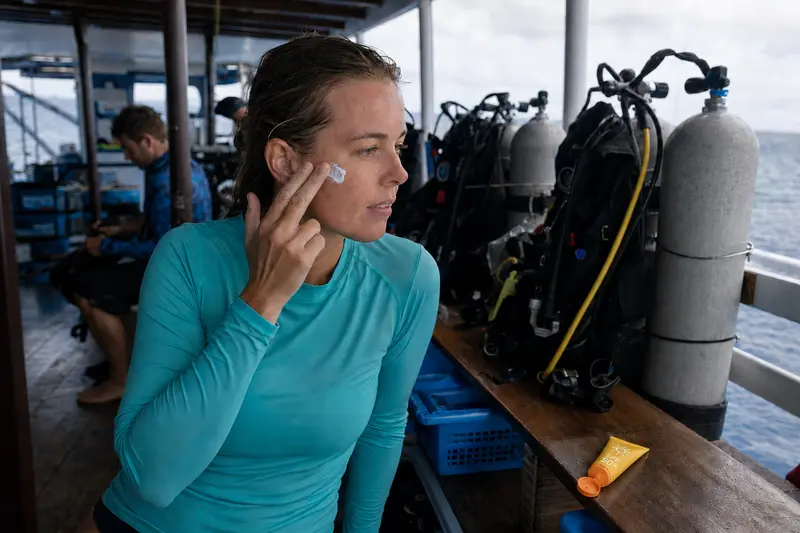
Reapply sunscreen every 2 hours and after swimming or towelling.
Protect ears, neck, feet, lips and the back of hands.
Drink water. Sunburn and dehydration often travel together.
Covering skin with UPF clothing is often more reliable than trying to sunscreen your whole body between dives.
What to pack to avoid sunburn
Broad-spectrum mineral sunscreen SPF 30 to 50+. Look for zinc oxide or titanium dioxide. Choose water-resistant formulas for boat days.
Reef-aware sunscreen. Avoid formulas with oxybenzone and octinoxate where possible, especially in reef destinations.
SPF lip balm. Lips burn fast on windy boats.
Zinc stick. Useful for nose, cheeks, ears and scars.
After-sun aloe gel. Helps cool and hydrate skin after exposure, but it does not undo UV damage.
Moisturiser. Useful after salt water, repeated showers and sun exposure.
UPF 50+ rashguard. Long sleeves protect shoulders, back and arms.
UV leggings or dive skin. Useful for snorkelling, long swims and dinghy time.
Lightweight long-sleeve shirt. Linen, technical fabric or tightly woven cotton can help on deck.
Wide-brim hat or legionnaire hat. A normal cap does not protect ears and neck well.
UV sunglasses. Choose wraparound or close-fitting styles for water glare.
Reusable water bottle. Hydration will not stop sunburn, but it helps you cope with heat and long dive days.
Reef-friendly sunscreen: what to look for
"Reef-friendly" is not a perfect regulated promise everywhere. Treat it as a label to check, not a guarantee. A safer starting point is mineral sunscreen with zinc oxide or titanium dioxide, plus UPF clothing so you use less product in the water.
For reef destinations, avoid sunscreens that contain oxybenzone or octinoxate where possible. Hawaii banned the sale and distribution of sunscreens containing those ingredients without prescription because of reef concerns.
Sunscreen helps, but clothing, shade and timing do most of the work on liveaboards.
What not to do
Do not assume cloudy means safe.
Do not swim for hours at midday without checking UV.
Do not rely on one morning sunscreen application for the whole day.
Do not forget the back, shoulders, feet, ears and lips.
Do not choose a tiny fashion hat when you need shade for face, ears and neck.
Do not use sunburn as a reason to skip hydration. Drink water.
Why sunburn can ruin a liveaboard
Sunburn is not just red skin. It can cause pain, swelling, fatigue, poor sleep and dehydration. On a liveaboard, that means putting on a wetsuit can hurt, sitting on the dinghy can hurt, lying down can hurt, and carrying gear can feel awful.
Simple liveaboard UV routine
Check UV index before breakfast.
Put on UPF clothing before the first briefing.
Use sunscreen on exposed areas before going outside.
Reapply after dives and swimming.
Stay shaded from 11 AM to 2 PM when possible.
Use a hat and sunglasses on deck and in tenders.
Wear a rashguard for snorkelling, not only diving.
Use after-sun care at night if your skin feels hot or dry.
Plan the sun like you plan the dives
Use DiveScanner to compare liveaboards by destination, month, marine life, certification and logged dives, then check the UV index before each trip day.
No. UV 11 or higher is extreme. UV 12 is a serious exposure level.
Can I burn on a cloudy liveaboard day?
Yes. Clouds can reduce UV, but they can also transmit and scatter it. Do not use clouds as your only protection.
Is water stronger for UV?
Water can reflect UV and increase total exposure. Boat decks, sand and bright surfaces can also reflect sunlight.
What is the best sun protection for divers?
UPF clothing, shade, a wide-brim hat, UV sunglasses and broad-spectrum sunscreen together. Sunscreen alone is not enough for long liveaboard days.
Should I use reef-friendly sunscreen?
Yes, but check ingredients. Mineral sunscreens with zinc oxide or titanium dioxide are a common starting point. Avoid oxybenzone and octinoxate where possible.